Green Wall Systems, Fire Safety & Responsibility
What project teams must understand before specifying preserved green walls in professional interiors.
Table of contents
#Biophilic design has matured
This article supports architects, designers, consultants, and clients with clear specification thinking. It focuses on system responsibility, not generic claims.
However, recent incidents and regulatory updates across Europe, the UK and other regions have exposed a critical gap between biophilic intent and technical responsibility.
Fire safety is not a peripheral concern in green wall projects. It is a core specification issue, and it must be addressed early, transparently, and product by product.
#The problem is not green walls
But unclear classification and poor specification
The growing scrutiny around green walls does not stem from biophilic design itself. It stems from vague material descriptions, misleading fire resistance claims, confusion between living and preserved systems, and a lack of system-level testing.
In many documented cases, fire risk was not caused by vegetation alone, but by how systems were assembled, documented and specified.
Treating green walls as decorative add-ons rather than architectural systems is the root cause of most compliance failures.
#Living walls vs preserved systems
A fundamental distinction that cannot be ignored
One of the most common specification errors is failing to distinguish between living green walls and preserved green wall systems.
Living systems typically involve
- Irrigation
- Organic growth
- Substrates and support layers that evolve over time
- Ongoing maintenance and moisture presence
These variables introduce unpredictable fire behavior and often require project-specific fire engineering strategies.
Preserved systems, when properly designed, offer
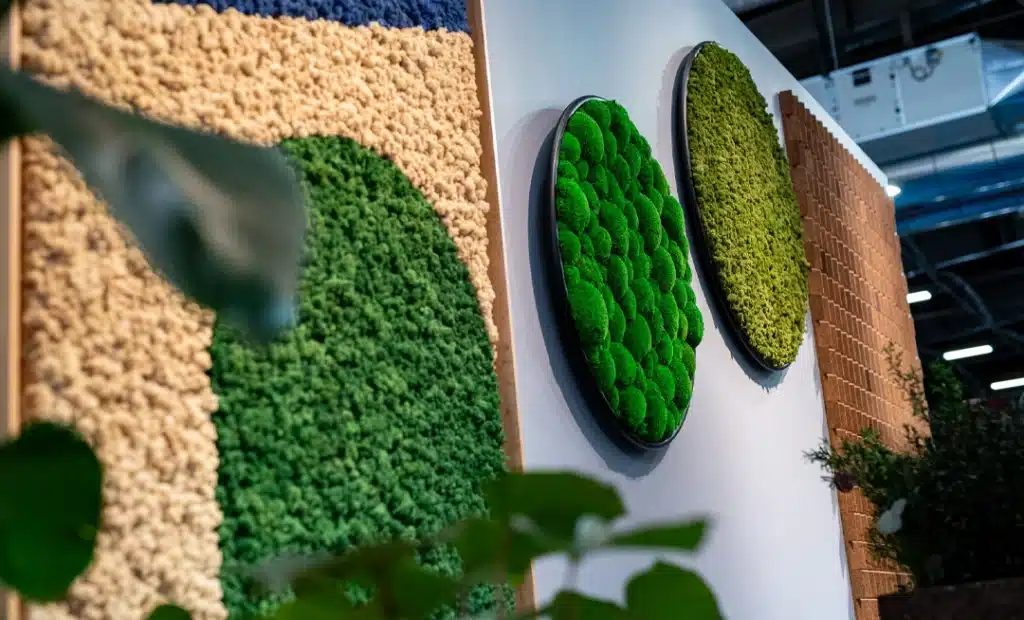
- Stable material composition
- No irrigation or biological growth
- Predictable long-term behavior
- The ability to test components and assemblies accurately
However, preserved vegetation alone is not sufficient. Fire performance depends on the entire system, not just the visible layer.
#Fire safety is a system question
Not a material claim
A recurring issue highlighted by recent guidance and industry investigations is the misuse of partial certifications. A moss sample tested in isolation does not represent a green wall system in real conditions.
Fire performance must consider
- Vegetation type and density
- Backing materials
- Adhesives and mounting systems
- Frames, substrates and wall interfaces
- Installation configuration
Responsible manufacturers test and document complete assemblies, not just isolated decorative elements. Any claim that stops at "the moss is fire rated" is incomplete and potentially misleading.
#Understanding fire classifications
Why clarity matters for prescribers
Fire ratings vary by region, but the underlying principle remains the same: materials and systems must demonstrate a controlled reaction to fire, not simply resistance to ignition.
For preserved green wall systems, this means transparent disclosure of fire classification, a clear description of what was tested, and honest information about limitations.
Misinterpretation of fire classes, particularly between Class B and Class C systems, has been a major source of confusion in recent years.
#Responsibility extends beyond compliance
Meeting minimum fire classification requirements is necessary, but not sufficient.
In professional interiors, responsibility also includes
- Risk anticipation
- Long-term performance predictability
- Clear documentation for engineering firms and authorities
- Avoiding unnecessary complexity in approval processes
This is especially critical in
- Corporate headquarters
- Public buildings
- Hospitality and healthcare environments
#Greenmood's position
Designing biophilic systems responsibly
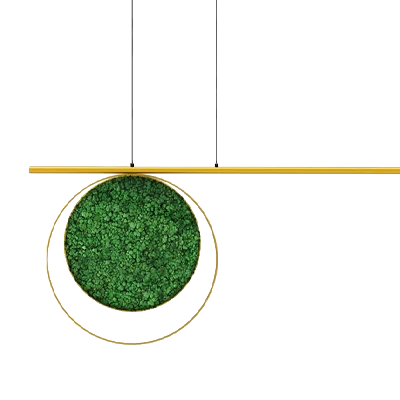
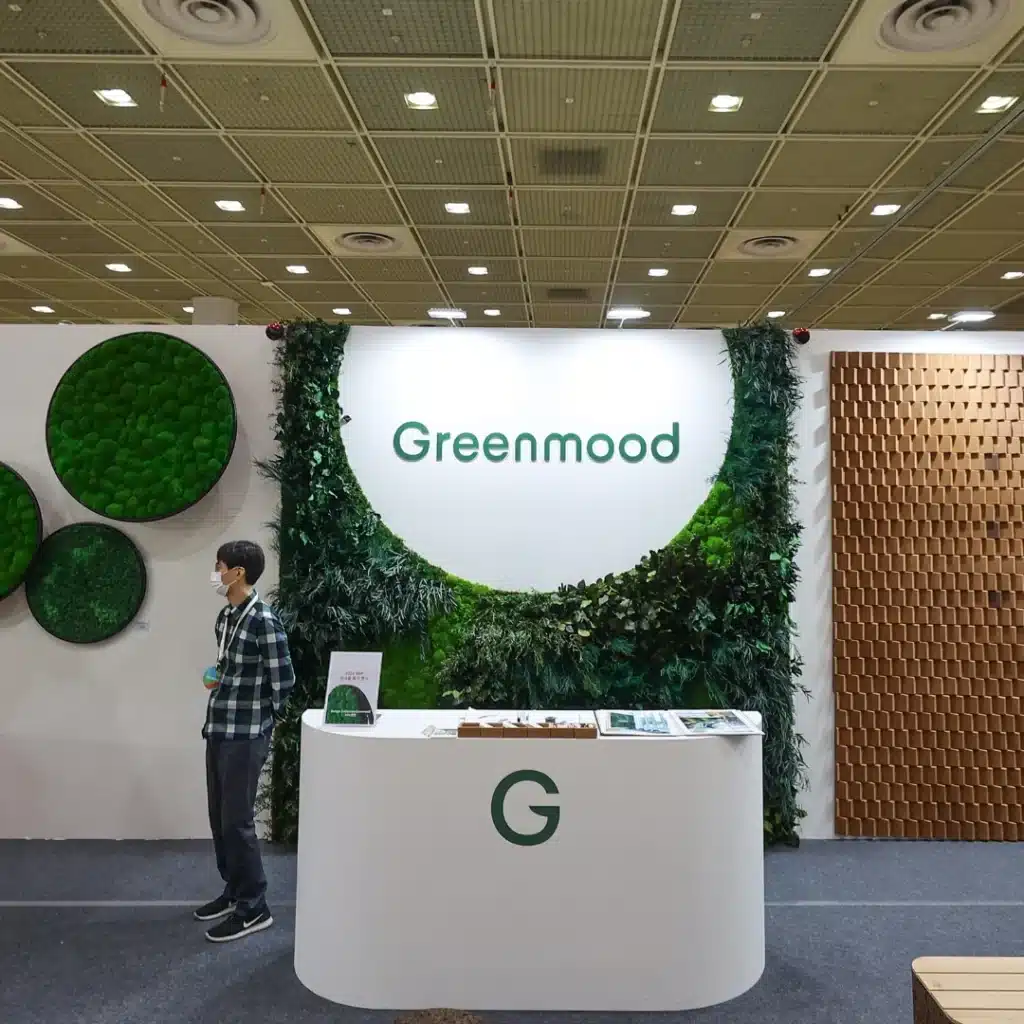
At Greenmood, preserved green walls are designed and documented as architectural systems, not as decorative surfaces.
This approach is based on several non-negotiable principles
- Preserved vegetation selected for stability and consistency
- System-level fire testing and documentation
- No irrigation, no biological evolution, no hidden variables
- Clear differentiation between product types and use cases
- Early integration into specifications
The objective is not to maximize visual impact at any cost, but to enable responsible, predictable and safe integration of biophilic solutions into demanding environments.
#What project teams should do differently
To avoid unnecessary risk, project teams should:
Fire safety cannot be added as an afterthought in a biophilic project. It must be designed in from the start.
#A more mature future for biophilic design
The growing attention around green wall fire safety is not a setback for biophilic design. It is a sign of maturity.
As the industry evolves, responsible manufacturers, consultants and designers have an opportunity to elevate standards, clarify expectations and reinforce trust.
Biophilic design will continue to grow. But only solutions that combine aesthetic intent, technical rigor and lasting accountability will stand the test of time.
Final takeaway
Preserved green wall systems can be safe, compliant and reliable. But only when they are specified as systems, not surfaces. That distinction is where responsible biophilic design begins.